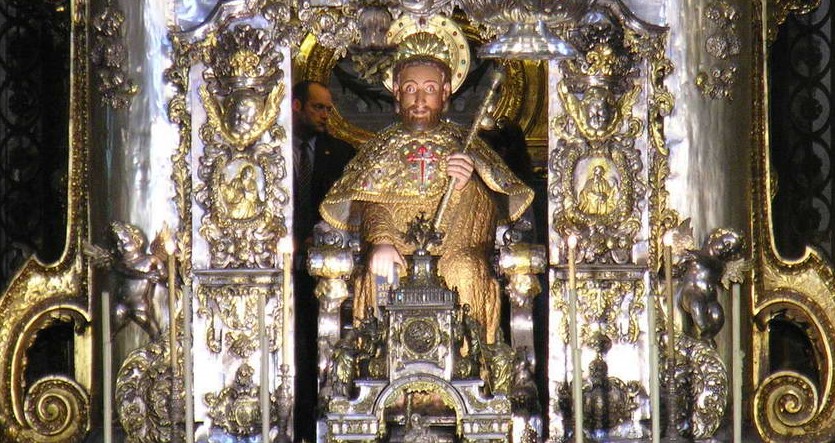
The legend and traditions created around Santiago are among the richest in the history of Christianity, but if we ignore those stories which were written centuries after his death, the actual knowledge we have about his life is very scarce. The best documented fact...
History and tradition
ROME, SANTIAGO, JERUSALEM: THE MAJOR PILGRIMAGES
The year 2025 is a year of the Roman Jubilee. Far from forgetting or ignoring it, we at the Jacobean Foundation want to begin a series of posts on pilgrimages to Rome and their relationship with Santiago de Compostela. We begin this series with an introduction to the...
The Order of St. John of Malta and the Way of St. James
Throughout the Middle Ages and the Modern Age, military orders played a special role in the Camino, where the presence of its knights, including monks and warriors, was instrumental in the defense of the pilgrims and the route itself. The Military and Hospitalier...
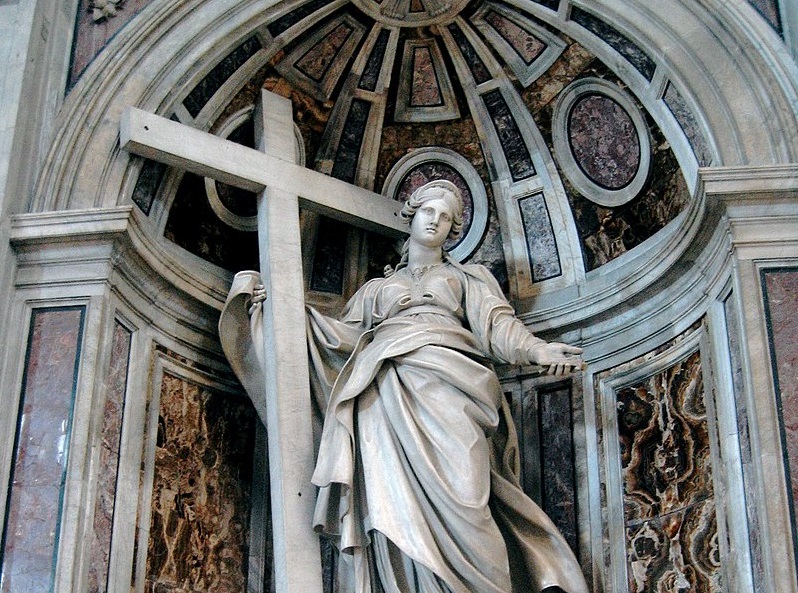
Saint Helena: Empress, traveller and pilgrim to the Holy Land
History has too often been written by and about men. For centuries, authors of all kinds and conditions have told us about intrepid adventurers, travellers and navigators, but completely leaving women like Egeria or Santa Elena, pilgrims and travellers of the fourth...
Medieval Irish Pilgrims to Santiago de Compostela
Thanks to the dissemination and donations made by Camino Society Ireland, the very active Jacobean association of Ireland, we have been able to access a gem of pilgrimage literature: the book Medieval Irish Pilgrims to Santiago de Compostela. by Bernadette Cunningham....
The Monte do Gozo seen by pilgrims of other centuries
The pilgrimage of the 21st century is undoubtedly very different from that of medieval times, but there is one aspect in which the two experiences seem to be similar: the emotions experienced during the Camino and those that are experienced when reaching the goal,...
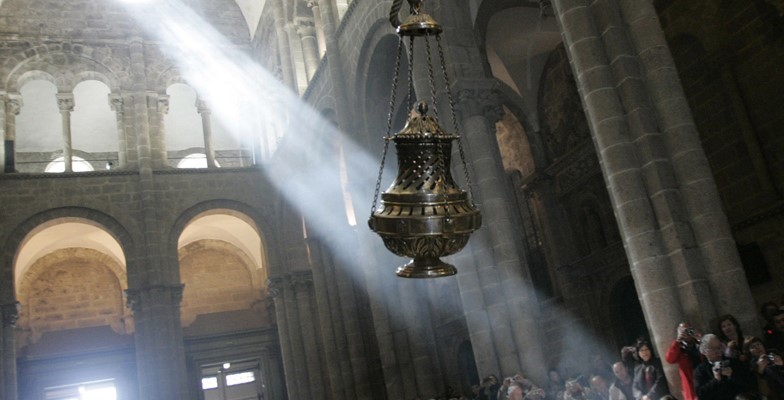
Pilgrimage rites today: What do pilgrims do when they arrive in Santiago?
The most famous and indispensable of the traditions is the one that takes the pilgrim to the high altar of the cathedral: to embrace to the Saint, and later to visit his tomb in the crypt. The embrace or "tightening", as it is called in Galician, is given to the...
What did the pilgrim do on arriving in Santiago in past centuries?
Over the centuries and, in particular, in recent years with the new awareness of protecting heritage, many of the rituals that pilgrims performed in the Cathedral of Santiago have been lost or have had to change, today we are going to remember some of them. Among the...
Maritime pilgrimage
The importance of pilgrimages by sea is unquestionable. English, Irish, Flemish, Scandinavian and Hanseatic sea routes were used since virtually the beginning of pilgrimages. Some experts like Lacarra speak of the sea as the oldest pilgrimage route, and it was via the...
Monte do Gozo: Tradition and History
A few kilometers from Compostela is the celebrated "Monte Gaudii" or Monte do Gozo, whose name refers to the joy that the pilgrims felt when from that hill they got their first glimpse of the towers of the Cathedral of Santiago in the distance and realized that after...
¿WHY CONTINUE ON TO FISTERRA-MUXÍA?
Throughout the centuries, many pilgrims to Santiago have continued on their way to the sea, to the beaches and sanctuaries of Fisterra and Muxía. Many of them did so for the same reasons they visited Compostela, to make pilgrimages to holy places, to Christian...
O CEBREIRO SEEN BY PILGRIMS OF OTHER CENTURIES
O Cebreiro is today a magical place, known and loved by pilgrims from all over the world. In the past, however, its geographical location in a high mountain area, in the Galician-Leonese massif, which reaches 1,300 meters of altitude, made it an extremely fearful...